
Trekking
What to Pack for the W Trek and O Circuit in Torres del Paine
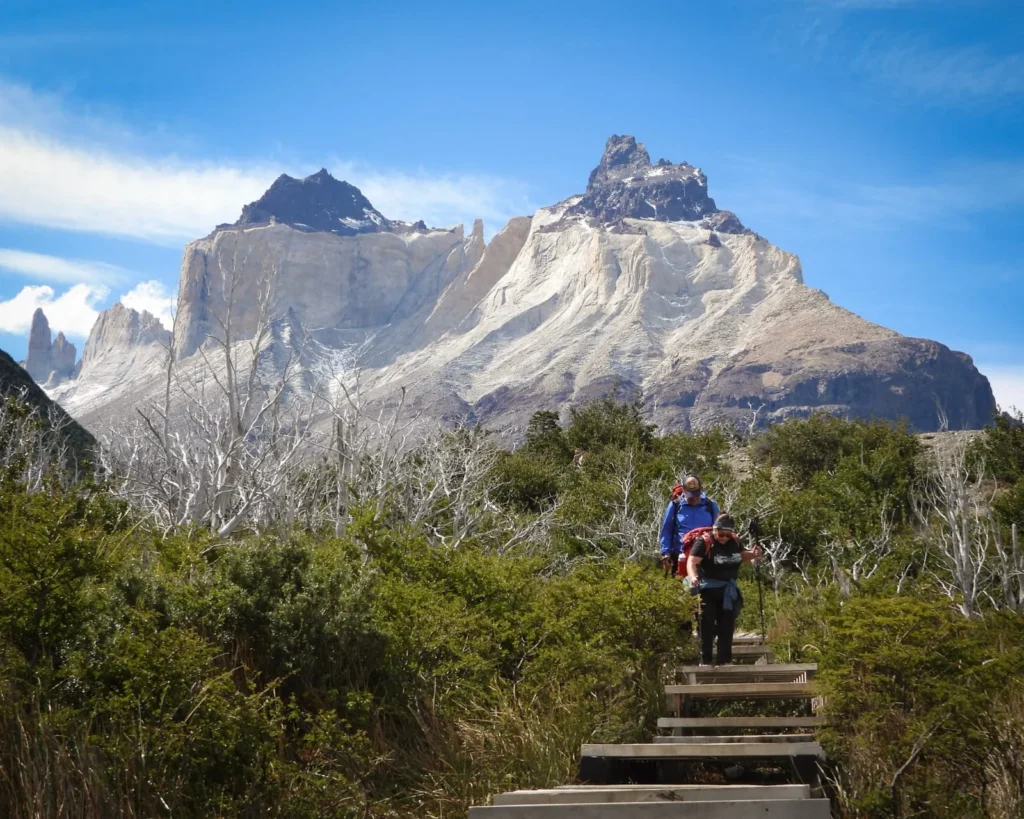
What you need to carry depends on how your trek is booked. A traveler carrying camping equipment and food needs a very different backpack from someone whose accommodation, meals and sleeping gear are already arranged.
This guide explains what belongs in your backpack, what may already be included in your program, and what changes between the W Trek and the more remote O Circuit.
Quick answer
For either circuit, bring a waterproof jacket and pants, warm layers, broken-in hiking footwear, trekking socks, gloves, a warm hat, sun protection, a headlamp, a reusable water bottle, personal medication and a comfortable backpack.
Do not assume that tents, sleeping bags, meals or camping equipment are included. Check the Included section of your specific program before packing.
The layer system, in four pieces
Everything else on this list is detail. This is the part that decides how the day goes.
Base layer
Next to the skin. Merino wool or synthetic, never cotton: it moves sweat away and dries while you keep walking.
Mid layer
Fleece or a light synthetic pullover. This is the layer you add and remove most often during the day.
Insulated jacket
Down or synthetic, for the stops, the camp and the early starts. How warm it needs to be depends on your season and on how cold you run.
Waterproof shell
Jacket with a hood, and waterproof pants. Not water resistant: waterproof. This is the layer that decides whether a windy afternoon is uncomfortable or a problem.
What you carry every day
This is the pack you walk with, whatever your program includes.
- Backpack that fits you, with the hip belt actually carrying the weight
- Backpack liner or dry bags: rain finds its way in
- Reusable water bottle or hydration reservoir
- Waterproof jacket and waterproof pants, within reach and not at the bottom
- Warm layer for the stops
- Headlamp with spare batteries
- Sun protection: sunglasses, sunscreen and lip balm with sun protection
- Personal prescription medication
- Snacks for the walking hours
- Phone and power bank
Clothing and waterproof layers
- Waterproof jacket with hood
- Waterproof pants
- Warm insulated jacket
- Base layers, merino wool or synthetic, never cotton
- Fleece or mid layer
- Hiking pants
- Warm hat
- Gloves
- Buff or neck warmer
- Trekking socks, plus spares
- Something dry to change into at camp
Footwear
- Hiking boots or trail shoes, broken in before you travel
- Camp shoes or light shoes for the evening
- Gaiters, useful on wet or snowy sections
Personal and safety items
- Small first aid kit
- Blister care, and know how to use it before you need it
- Basic toiletries in small sizes
- Earplugs, for shared accommodation
- Small dry bags or zip bags for organization
- Travel documents and insurance details
What may already be included, and what to leave behind
The middle column is the one to check on your own program page. It is where most packing mistakes come from.
| Pack yourself | Confirm in your program | Usually leave in Puerto Natales |
|---|---|---|
| Waterproof layers | Sleeping bag | Large suitcase |
| Warm layers | Tent or prepared campsite | Unnecessary duplicate clothing |
| Hiking footwear | Meals and trail food | Heavy cotton clothing |
| Personal medication | Trekking poles | Formal clothing |
| Headlamp | Transfers and catamaran | Full-size toiletries |
| Sun protection | Park entrance | Valuables not needed on the trail |
Your booking confirmation and the Included section of your program always take priority over a general packing list.
What changes between the W Trek and O Circuit?
W Trek
The trail portion is commonly completed over four or five hiking days. Some programs are longer because they include accommodation in Puerto Natales before or after the trek.
With fewer consecutive days on the trail, you will usually need fewer personal supplies. The essential clothing system remains the same: waterproof protection, warm layers and footwear suitable for uneven terrain.
O Circuit
The O Circuit includes more consecutive hiking days and travels through the more remote northern side of the Paine Massif.
You may need additional personal supplies, medication, batteries and changes of socks, but carrying more clothing is not always the answer. Choose layers that can be reused and dry reasonably quickly. Your required camping and sleeping equipment depends on what your program includes.
Packing depends on how you travel
Compare the Guided W Trek, Self-Guided W Trek and the Guided and Self-Guided O Circuit to see which accommodation, meals, camping equipment and logistics are included.
If you are still deciding how to sleep, read camping vs refugios. If you are weighing a guide, read guided vs self-guided. And if you are travelling outside the main season, read Torres del Paine in winter.
Frequently asked questions
Do I need a sleeping bag for the W Trek?
It depends on your program. On our equipped camps the tent, mattress and sleeping bag are already at each confirmed site, so you do not carry them. If you booked a bare campsite or a different operator, you do. Check the Included section of your own program before you pack.
What size backpack should I bring?
There is no single answer, because it depends on what you carry. If your accommodation, sleeping equipment and meals are arranged, a comfortable day pack is usually enough. If you carry a tent, a sleeping bag and food, you need a full trekking backpack. Decide the program first, then the backpack.
Do I need hiking boots or are trail shoes enough?
Both are used on these trails. What matters more is that the footwear is broken in, grips on wet rock and handles uneven ground for several hours a day. Ankle support helps on the moraine below the towers and on the John Gardner Pass.
Are trekking poles necessary?
Not obligatory, but most travelers are glad to have them on the descents. On our programs poles are included, so check before buying a pair.
What should I pack for winter conditions?
Winter and shoulder-season conditions can require more than this list: warmer layers, gaiters, and sometimes trekking poles or microspikes depending on the trail. Check the current CONAF trail report and your final DoPatagonia instructions before departure.
Can I leave my suitcase in Puerto Natales?
Yes. You take on the trail only what you need, and the rest stays at the hotel in Puerto Natales, where you return after the trek. Confirm it with your hotel and with us when you arrive.